
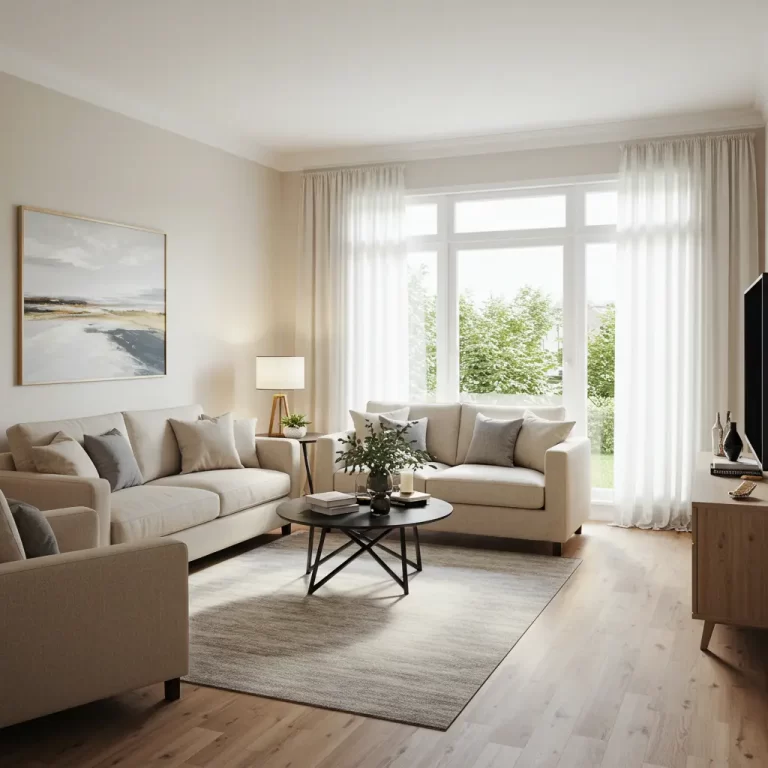
When you’re ready to sell your home, the presentation can make all the difference between a quick sale at asking price and a property that lingers on the market. Home staging has become an essential part of the selling process, with staged homes selling up to 88% faster and for up to 20% more than non-staged homes. Whether you’re a first-time seller or looking to maximize your property’s value, these professional home staging tips will help you create an irresistible space that buyers can’t wait to call their own.
What is Home Staging and Why It Matters
Home staging is the art of preparing a property for sale by highlighting its strengths, downplaying its weaknesses, and creating an inviting atmosphere that appeals to the broadest range of potential buyers. Unlike interior decorating, which reflects personal style, staging focuses on creating a neutral, appealing space where buyers can envision their future.
In today’s competitive real estate market, buyers often make decisions based on first impressions. A properly staged home stands out in online listings, attracts more viewings, and creates emotional connections that drive offers. According to the National Association of Realtors, 82% of buyers’ agents say staging makes it easier for buyers to visualize the property as their future home.
The Impressive Benefits of Effective Home Staging
The investment in home staging typically delivers substantial returns:
- Faster sales: Staged homes spend 33-50% less time on the market compared to non-staged homes.
- Higher offers: Properly staged homes often sell for 1-10% more than non-staged properties.
- Better online presence: Staged homes photograph better, generating more interest from online listings.
- Competitive edge: In areas with high inventory, staging helps your property stand out.
- Perceived value: Staging can make even modest homes appear more luxurious and well-maintained.
Rather than seeing staging as an expense, consider it an investment that maximizes your property’s market potential and reduces carrying costs associated with a prolonged sale.
Essential Home Staging Tips Anyone Can Implement
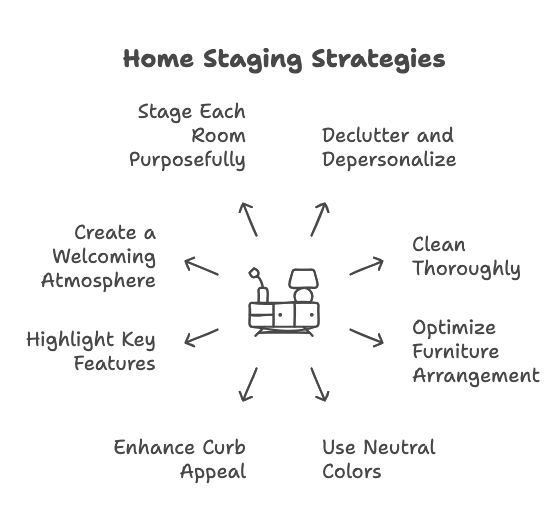
1. Enhance Your Curb Appeal
First impressions start at the curb. Potential buyers often drive by properties before scheduling viewings, and an unappealing exterior can immediately turn them away.
Start by pressure washing walkways and siding, trimming overgrown bushes, and mowing the lawn. Paint or clean your front door, add new house numbers in a modern font, and place potted plants near the entrance. Consider simple updates like new mailbox, doormat, or exterior lighting fixtures that create a welcoming approach to your home.
2. Declutter and Depersonalize Your Space
Clutter makes spaces feel smaller and distracts buyers from seeing the home’s true potential. Begin by removing approximately 30% of your belongings from each room, focusing first on personal items like family photos, collections, and memorabilia.
Use the three-box method (keep, donate, discard) to systematically work through each room. Pay special attention to closets and storage areas—buyers will look inside and overstuffed spaces suggest inadequate storage. Consider renting a temporary storage unit for excess furniture and seasonal items during the selling period.
3. Deep Clean Every Corner
Nothing turns off buyers faster than dirt and grime. A truly deep clean goes beyond regular housekeeping to address often-overlooked areas:
- Clean or replace grout in tiled areas
- Wash windows inside and out
- Dust ceiling fans, light fixtures, and baseboards
- Clean inside appliances, cabinets, and drawers
- Address any odors, especially those from pets, cooking, or smoking
For the best results, consider hiring professional cleaners who specialize in preparing homes for sale. Their expertise and specialized equipment can achieve results that surpass typical DIY cleaning.
4. Optimize Lighting Throughout the Home
Bright, well-lit spaces feel larger, more cheerful, and more inviting. Maximize natural light by cleaning windows, removing heavy drapes, and trimming outdoor foliage that blocks sunlight.
Update outdated fixtures with modern, energy-efficient alternatives. Aim for a mix of lighting types in each room: ambient (general illumination), task (functional lighting for specific activities), and accent (highlighting architectural features or artwork). Before showings, ensure all bulbs work and are the same color temperature for consistency.
5. Update with Neutral Colors
While your bold red dining room may suit your taste, neutral colors help buyers envision themselves in the space. Consider repainting vibrant walls in universally appealing neutrals like warm beige, soft gray, or crisp white.
Popular choices include Sherwin-Williams “Agreeable Gray” or Benjamin Moore “Simply White,” which create bright, spacious-feeling interiors. Don’t forget ceilings, trim, and doors, which can dramatically freshen a space when painted.
6. Rearrange Furniture for Flow and Space
Furniture arrangement significantly impacts how spacious a room feels. Remove oversized or excess pieces that make spaces feel cramped. Position remaining furniture to create conversation areas and clear pathways through each room.
Pull furniture away from walls to create a sense of space, ensure pieces are proportional to the room, and use area rugs to define zones in open floor plans. Consider the focal point of each room (fireplace, window with a view) and arrange furniture to highlight these features.
7. Define the Purpose of Each Room
Rooms with ambiguous purposes confuse buyers. That spare bedroom currently serving as a gym/office/craft room? Choose one clear function that will appeal to the broadest audience.
Bedrooms should be staged as bedrooms, not storage areas or home offices. If you have an unusual space, define it in a way that adds value—perhaps a dedicated home office, reading nook, or workout area that showcases the versatility of the home.
8. Make Minor Repairs and Updates
Small defects signal potential larger problems to buyers. Address minor issues before listing:
- Fix leaky faucets and running toilets
- Replace cracked switch plates and outlet covers
- Patch holes in walls and touch up paint
- Tighten loose doorknobs and cabinet hardware
- Fix squeaky doors and sticky drawers
These inexpensive fixes deliver significant returns by creating the impression of a well-maintained home.
9. Stage High-ROI Rooms First
If your budget limits complete home staging, focus on areas that influence buyers most:
- Kitchen: Often considered the heart of the home, minor updates like new hardware, fresh caulk, and decluttered counters can transform this space.
- Primary bedroom: Create a restful retreat with quality bedding, symmetrical nightstands, and a clutter-free environment.
- Living room: As the main gathering space, ensure this room feels spacious, bright, and conversation-friendly.
- Entrance: The foyer or entryway creates crucial first impressions when buyers step inside.
10. Add Fresh Elements and Finishing Touches
The final layer of staging adds life and warmth to your prepared spaces:
- Place fresh flowers or green plants in key areas
- Add tasteful accessories in odd-numbered groupings (3 or 5 items)
- Use plush towels in bathrooms and throw pillows in living spaces
- Incorporate subtle, natural scents like citrus or vanilla
- Display a bowl of fresh fruit in the kitchen
These elements add dimension and create emotional connections with potential buyers.
Room-by-Room Staging Strategies
Living Room Staging
Create a welcoming conversation area centered around a focal point like a fireplace or window. Use appropriately sized furniture with space to move around easily. Add texture through throws and pillows, and ensure adequate lighting from multiple sources.
Kitchen Staging
Clear countertops of everything except 1-2 decorative items. Ensure appliances are spotlessly clean, replace outdated hardware, and consider painting dated cabinets. Add fresh elements like herbs in small pots or a bowl of bright citrus fruits.
Bedroom Staging
Invest in attractive bedding and create symmetry with matching nightstands and lamps. Remove personal items and ensure closets are only 50-70% full to showcase storage. Position the bed as the focal point, ideally visible from the doorway.
Bathroom Staging
Replace worn shower curtains, bathmats, and towels with fresh, coordinating ones. Clear countertops of personal toiletries and create a spa-like atmosphere with rolled towels, decorative soaps, or a small plant. Ensure mirrors and fixtures shine and grout is clean or refreshed.
DIY vs. Professional Home Staging: Making the Right Choice
While DIY staging can be effective, professional home stagers bring expertise, inventory, and objectivity to the process. Consider your timeline, budget, and personal attachment to your home when deciding between approaches:
DIY staging works well when:
- You have a good eye for design and organization
- Your home requires minimal updates
- You have time to dedicate to the process
- Budget constraints make professional staging prohibitive
Professional staging may be worth the investment when:
- Your home is vacant
- You’re selling in a highly competitive market
- The property is in a luxury price bracket
- You’re pressed for time or living remotely
A middle-ground approach might involve a staging consultation (typically $150-$300) where professionals provide guidance that you implement yourself.
Frequently Asked Questions About Home Staging
How expensive is home staging? Professional staging typically costs $300-$600 for an initial consultation, plus $500-$1,500 per month for furniture rental in vacant homes. DIY staging can cost significantly less depending on how much you already own.
Is it better to sell a house empty or staged? Staged homes typically sell faster and for more money than empty homes. Empty rooms often appear smaller than they actually are and provide no emotional connection or visual cues about how spaces function.
How long before selling should you stage your home? Ideally, stage your home before listing photos are taken and the property hits the market. If already listed, it’s never too late to stage, especially if showing activity has been slow.
Which rooms are most important to stage? Focus on the living room, kitchen, primary bedroom, and entrance areas first, as these make the strongest impressions on buyers.
Final Thoughts: Invest in Staging for Better Returns
Home staging is no longer just for luxury properties—it’s a valuable marketing tool for homes at every price point. By implementing these staging tips, you create an environment where buyers can emotionally connect with your property, visualize their future there, and ultimately submit stronger offers.
Remember that the goal is to appeal to the broadest possible audience, not to showcase your personal style. The small investment of time and resources in proper staging typically delivers substantial returns through faster sales and higher offers, making it one of the smartest pre-listing decisions you can make.